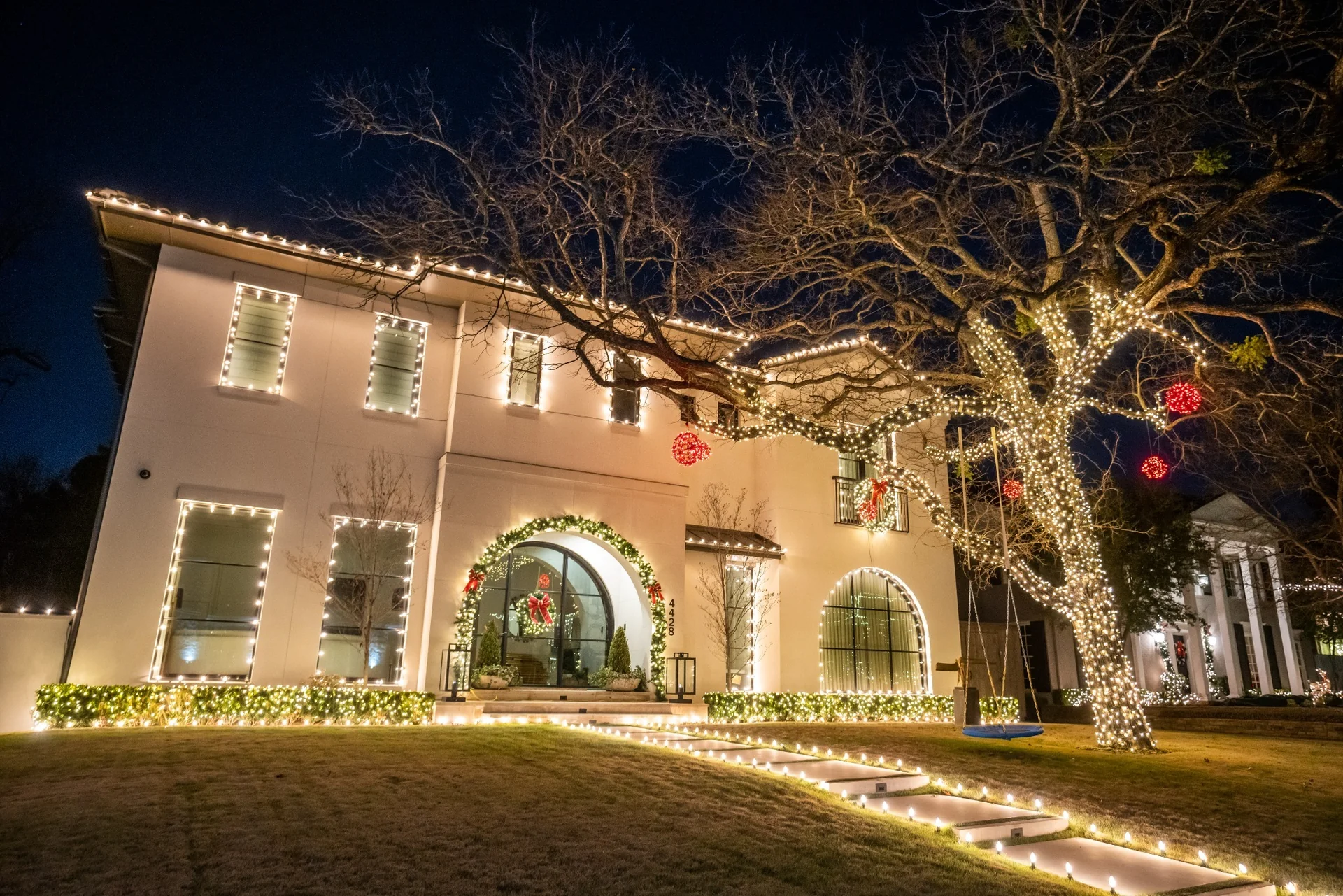

Polished holiday lighting for homes doesn’t have to mean permanent fixtures. Built-in outdoor lighting creates a consistent architectural look and can serve year-round, while seasonal lights let you change the display and put it away after the holidays. The choice comes down to whether you prefer a repeatable setup or a fresh arrangement each season, and which rooflines, trees, and other features you want to highlight.
This guide compares permanent and seasonal options, explains when a DIY installation makes sense and when professional help can simplify the work, and explores ways to use outdoor lighting beyond the holidays. Placement, upkeep, and your preferred look all help shape a cohesive plan for your home.
Key Takeaways
- Choose a permanent setup for a consistent architectural look, or seasonal lights when you want to change the display from year to year.
- Match the installation approach to the rooflines, access, and design details involved, so the finished layout feels considered and cohesive.
- Plan lighting around more than one occasion by choosing placements and effects that can suit different moments throughout the year.
- Understand how professional installation can simplify design and setup when you want a polished exterior without managing every step yourself.
Permanent outdoor holiday lighting
Permanent systems keep lighting discreet along rooflines, peaks, and other architectural edges. They provide a ready-made foundation for Christmas displays and year-round accents.
Start with the features you want to emphasize, such as a front gable, porch, or roofline. A restrained, consistent arrangement can define your home’s shape without covering every surface. Decide whether the lights should mainly add holiday color or blend into everyday exterior lighting. That choice guides placement and how the display can suit different occasions.
Weather Resistance and Outdoor Suitability
For outdoor Christmas lighting, choose products marked for outdoor use and follow their placement instructions. Exposure varies around a home: roof edges face different conditions than a sheltered porch. Arrange connections as directed, and avoid placing lights where runoff collects. For indoor holiday lighting, use products intended for interior spaces. The labels indicate where each product is designed to be used.
Electrical Safety and Local Codes
Electrical safety starts with the product label. The National Institute of Standards and Technology advises using decorative lights labeled by a recognized testing laboratory. For permanent lighting, plan the route and connection points before work begins. Consider how the lights connect to the home’s existing electrical setup, and account for applicable local codes. This keeps the design grounded in both appearance and safe installation.
Energy Use and Electricity Costs
To reduce holiday lighting energy use, choose LED lights and limit the display to the areas that matter most. According to the National Institute of Standards and Technology, LED holiday lights use less electricity than traditional incandescent lights. A focused roofline or entry accent can create definition without lighting every tree and feature. Switch lights off when they aren’t needed, rather than running the display continuously.
Commercial-grade outdoor Christmas lighting can suit larger rooflines, entrances, or tree displays where a unified layout matters. “Commercial-grade” describes a product category, so still check that the product is intended for your setting. Keep indoor and outdoor products separate, and plan permanent lighting around architectural lines first. This gives displays a clear structure for Christmas and other occasions without relying on seasonal decorations alone.
DIY and professional installation
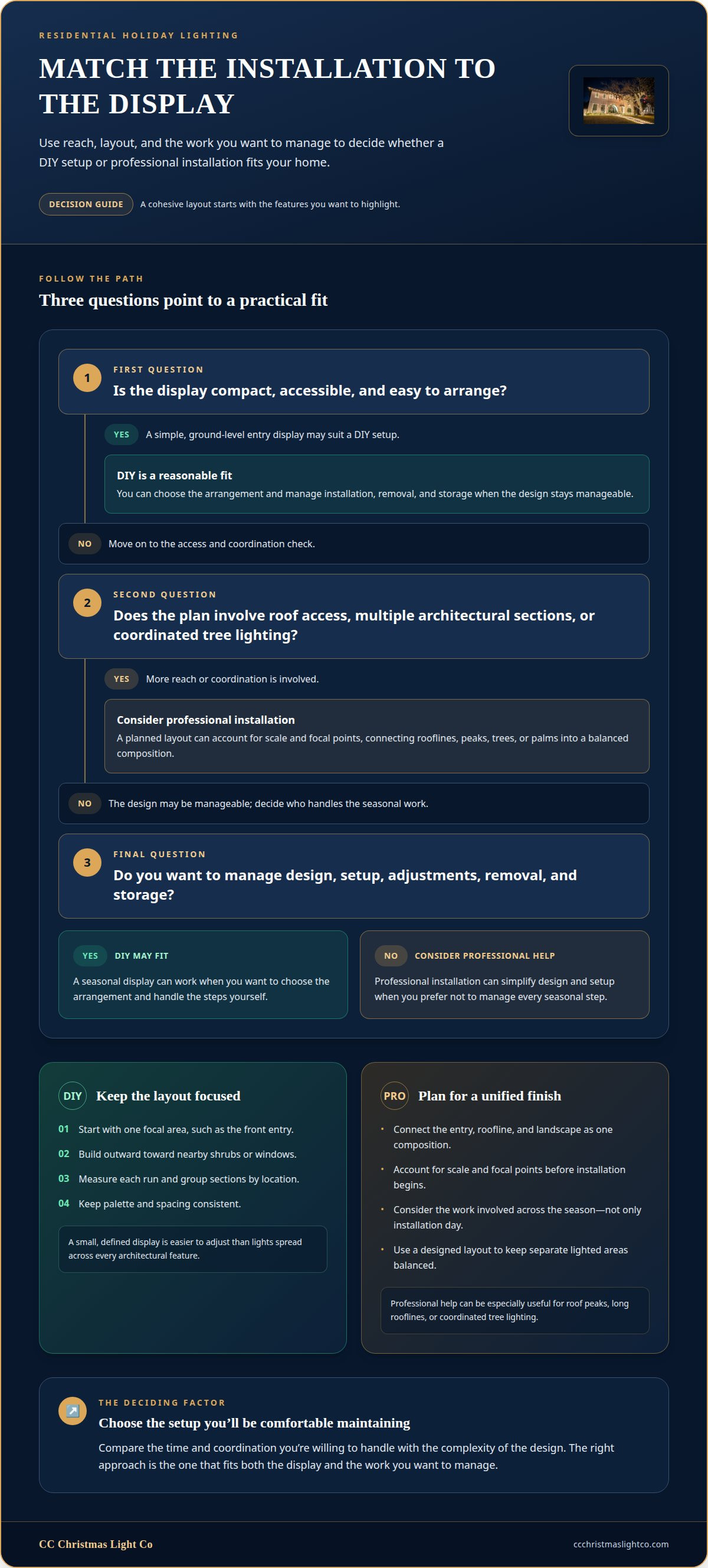
Choose an installation approach by considering the display’s reach, layout, and repeatability. A simple arrangement around a ground-level entry may suit a homeowner who enjoys decorating. Roof peaks, long rooflines, and coordinated tree lighting call for more planning. The best fit depends on the work you want to manage, not just the finished look. Planning holiday lighting for homes starts with deciding which features deserve attention.
For a DIY setup, begin with a clear design. Select one focal area, such as the front entry, then build outward toward nearby shrubs or windows. Measure each run before arranging lights, and group sections by location. Keep the palette and spacing consistent. A small, defined display is easier to adjust than lights spread across every architectural feature.
DIY can also suit seasonal displays that change each year. You choose the arrangement, install it, then handle removal and storage. That control works well when the design stays accessible and manageable. It can become less appealing when setup means coordinating several roof sections, matching both sides of a facade, or repeating the same layout each season.
Professional installation makes sense when you want a unified finish across rooflines, peaks, trees, or palms. A designed layout accounts for scale and focal points before installation begins, helping keep the display balanced instead of treating each lighted area as a separate decoration. For a larger home, the design can connect the entry, roofline, and landscape into one composition. This can make holiday lighting for homes feel cohesive across distinct exterior features.
Use these decision points to clarify the right approach:
- Keep it DIY: the display is compact, accessible, and easy to arrange.
- Consider professional help: roof access, multiple architectural sections, or coordinated landscape lighting are involved.
- Think beyond installation day: account for design, adjustments, removal, and storage across the season.
Professional installation is especially useful when you want a polished layout without managing every seasonal step yourself. Compare the time and coordination you’re willing to handle with the complexity of the design. That distinction helps you choose a setup you’ll enjoy maintaining, not just one that looks appealing on its first evening.
Lighting for holidays and year-round occasions
A flexible lighting plan can extend beyond Christmas without making your home feel permanently festive. Start with one architectural feature, such as a roofline, entry, or palm, then decide whether it should carry seasonal color or a quieter everyday accent. Permanent holiday lighting can provide the base, while seasonal strands add a distinct holiday layer. This approach helps holiday lighting for homes feel tailored to the property and its occasions.
Product dimensions help you picture how different formats fit your home. A listed smart C9 string measures 157 feet and includes 200 LEDs. A listed warm-white C9 string measures 88 feet with 110 LEDs. These examples show why a display plan should account for both run length and each bulb’s visual rhythm, rather than choosing by appearance alone.
For a softer seasonal effect, listed outdoor icicle lights measure 66 feet and include 640 warm-white LEDs. A shorter listed version measures 33 feet and includes 400 warm-white LEDs. Compare those formats with the edge you want to define, such as a porch overhang or a section of roofline. Keep the treatment focused so it complements the home’s proportions.
Color-changing string lights offer another seasonal option. One listed set measures 40 feet and includes 380 LEDs. Use a color-changing strand for a holiday focal area, then keep other exterior lighting restrained. That contrast helps the display feel deliberate instead of scattered. For year-round use, choose a permanent layout that follows architectural lines and reserve temporary accents for occasions calling for a different palette.
Plan the display in layers:
- Everyday outline: use a permanent roofline or entry treatment as the visual foundation.
- Holiday detail: add seasonal C9, icicle, or color-changing strands where they reinforce a focal point.
- Landscape emphasis: consider a tree or palm as a separate accent, rather than extending lights across every feature.
Match strand length, light style, and placement to each occasion. A consistent foundation can support Christmas while keeping the exterior more understated through the rest of the year. A considered arrangement lets seasonal accents change without disrupting the home’s overall composition.
What electrical safety rules and local codes apply to holiday lighting?
Plan for safety based on the products, power connections, and installation type. A plug-in seasonal display differs from permanent lighting connected to household wiring. First identify the setup you’re planning, then review product instructions and the local requirements relevant to the work.
The National Institute of Standards and Technology advises using decorative lights labeled by a recognized testing laboratory. Look for that label on the packaging or product information before installation. Follow the manufacturer’s instructions for indoor or outdoor placement, too. For example, don’t use an indoor string for a roofline display.
Local code considerations depend on the installation. A temporary display using existing outlets differs from a project involving new or modified wiring. For permanent electrical work, identify the applicable local review process before installation begins. The wiring scope, connection method, and property’s existing setup all affect what needs review.
Keep the project organized with these practical steps:
- Identify the setup: distinguish plug-in seasonal lights from permanent wiring.
- Read product instructions: follow the intended placement and connection guidance for each light set.
- Map the route: note where the display runs, where power connects, and which areas remain exposed.
- Review local requirements: consider the installation type and wiring scope before permanent changes.
A roofline display, for instance, may combine outdoor-rated strands with connections near an entry. Plan for both the exposed lighting and the connection points. Keep wiring routes deliberate, avoid improvised changes, and resolve code questions before work starts. This helps distinguish decorative placement from electrical work that may involve local review.
If you want a coordinated exterior plan, explore a tailored holiday lighting design that accounts for your home’s roofline and focal areas.
CC Christmas Light Co: Residential Christmas Light Installation
CC Christmas Light Co can turn your home’s rooflines, peaks, entry, and landscape into a coordinated seasonal display. Its Residential Christmas Light Installation service is a fit when you want a tailored design and help managing the work instead of handling each installation detail yourself.
The process can include design, installation, maintenance, removal, and storage. Start by identifying the features you want to emphasize, such as a front entry. The online design process takes about a minute and helps you begin visualizing a direction for your property. For shared spaces, commercial properties, or community displays, CC Christmas Light Co also offers Commercial Christmas Light Installation and HOA Christmas Light Installation.
Contact CC Christmas Light Co to discuss a lighting design for your home.
Shape an exterior lighting plan that feels like yours
The next step is to decide what you want your home to communicate after dark. A calm roofline, defined entry, or softly lit landscape can each set a different tone. Choose one focal point first, then build a design around your home’s proportions and the occasions you want to mark.
For a tailored plan, CC Christmas Light Co offers Residential Christmas Light Installation, Outdoor Christmas Light Installation, and Commercial Christmas Light Installation. The team brings holiday-lighting experience dating back to 2017, with practical perspective on design and installation. A considered approach to holiday lighting for homes can create a seasonal display that feels connected to the architecture, rather than added as an afterthought.
Bring your ideas, preferred look, and key exterior features into the conversation. Contact CC Christmas Light Co to discuss a lighting plan for your property and take the next step toward a polished exterior.
Frequently Asked Questions
Not Sure Where To Start?
View your home from the street after dark, then decide what should draw attention first. An entry, front-facing gable, or mature tree can anchor the composition. Note nearby sightlines, such as a driveway approach or front windows, so the display reads clearly from where people will see it. That priority gives you a practical starting point for colors and placement.
How do you measure a roofline and plan a holiday lighting display?
Break the roofline into separate runs rather than measuring the facade as one span. Record each straight eave, gable edge, and return as its own segment, then total the measurements for the design. Mark corners and gaps on a simple sketch. This makes it easier to plan where strands begin and end, and to distinguish the roofline from features like a porch or dormer.
Are there alternatives to roof-mounted lights, such as projectors or ground displays?
Yes. Projectors can create a wall-focused effect without outlining the roof, while ground displays place illuminated forms near an entry, path, or garden bed. Choose based on the viewing angle and the feature you want to emphasize. A projector may suit a broad, unobstructed wall; a ground display can define an approach. Keep walkways clear and arrange elements so they don’t obscure the entry.