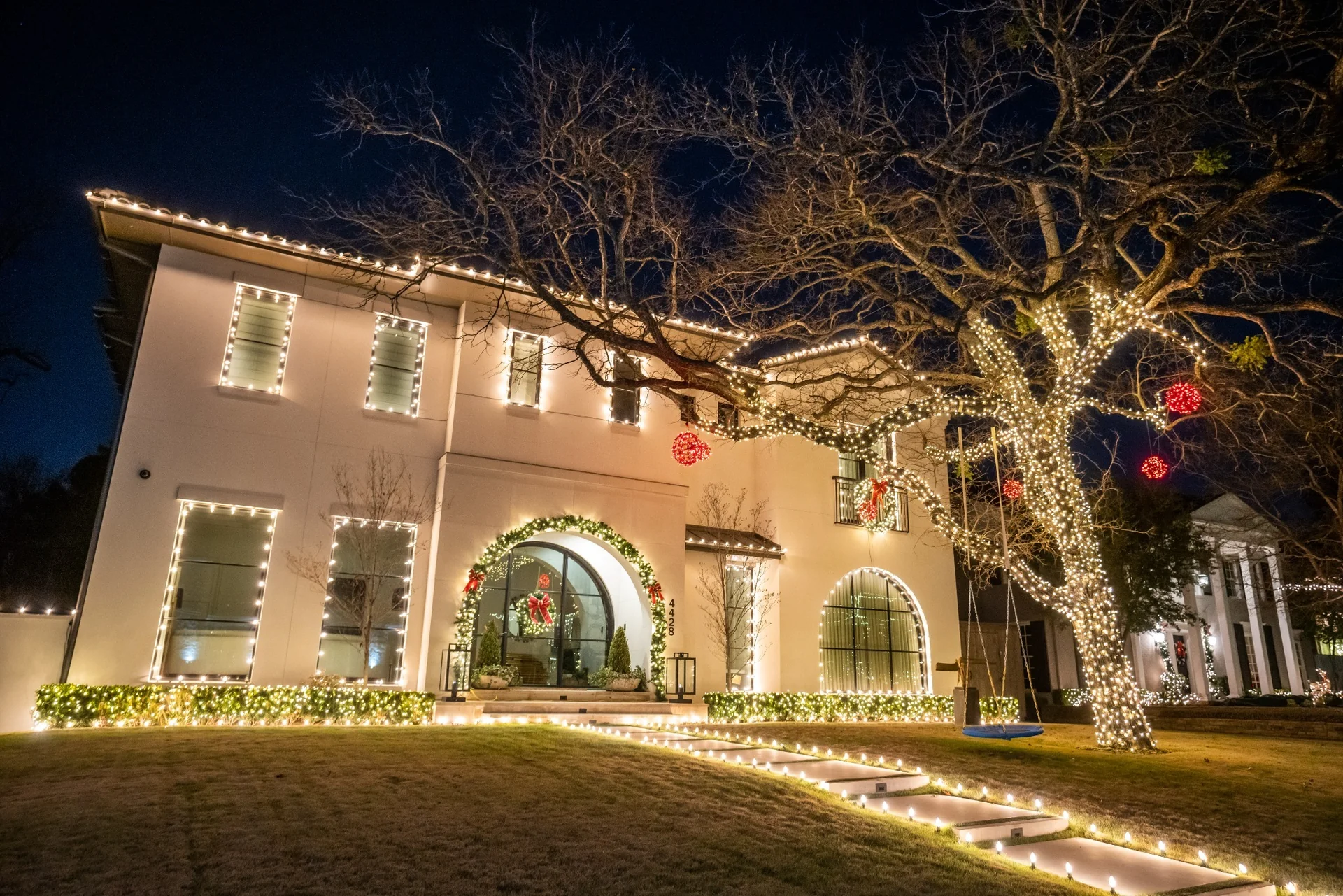

DIY suits a simple, ground-level display you can install and manage yourself. Professional installation is a better fit for rooflines or designs you want handled from planning through seasonal removal. The professional Christmas lights versus DIY decision also depends on who will manage upkeep, takedown, and storage.
This comparison explains the trade-offs in time, design flexibility, and seasonal responsibilities, so you can choose an approach that suits your home, business, or community property.
Key Takeaways
- Compare the full seasonal workload, not just the initial setup, before choosing your approach.
- Factor in who will handle maintenance, takedown, and storage once the display is up.
- Match your design ambitions and installation timing to the flexibility you want to keep.
- Use your property’s layout, access, and available time to decide which approach fits best.
What Is Professional Christmas Light Installation?
Professional installation means a crew plans and installs seasonal lighting on rooflines, peaks, and landscaping. When comparing professional Christmas lights versus DIY, consider access, design goals, and who will do the work. A crew can often complete a full roofline in hours, while DIY may take several days. Installers use clips designed for gutters and shingles, avoiding nails or staples that could damage roofing or trim.
DIY may suit a simple, single-story display. For permanent lighting, plan the layout, measure each run, choose outdoor-rated materials, and follow the product instructions. Avoid roof work if the height or pitch makes access difficult.
For home displays, LEDs offer an efficient lighting choice, and commercial-grade C9 LEDs are commonly recommended for DIY. Choose products designed for outdoor use and follow the manufacturer’s directions.
Outdoor-lighting rules vary by municipality and community. Review local requirements and HOA guidelines before installing a display, especially for permanent lighting or shared property.
DIY Christmas light installation can take 6 to 12 hours on a ladder, or stretch across several days. Homeowners should plan ahead for daylight and weather. Book a professional early enough to discuss the design and seasonal schedule.
| Option | Time | Design control | Seasonal responsibility |
|---|---|---|---|
| DIY | 6 to 12 hours or longer | Direct, hands-on | You manage setup and upkeep |
| Professional | Roofline installation can take hours | Planned, fitted design | May include maintenance, removal, and storage |
Your professional Christmas lights versus DIY decision should reflect the property’s access, the display’s complexity, and how much time you want to spend installing it.
Seasonal maintenance, takedown, and storage
Seasonal upkeep continues after the display turns on. Compare who will handle repairs, removal, and storage after the holidays.
Takedown and Off-Season Storage
Professional seasonal service commonly includes in-season maintenance, takedown, and off-season storage. Removal is typically scheduled after New Year’s, with lights taken down in January and stored until the following season. DIY leaves those tasks to you: taking down a roofline display can take another half day in January. The choice affects your post-holiday schedule as much as installation day.
Storage and Reuse
Organized storage makes it easier to reuse a display. Separate strands by location, such as the front roofline, porch, and ground-level shrubs. Coil each strand carefully, keep its connections together, and label containers by placement. This makes next season’s setup easier to plan. Professional storage takes that task off your list; with DIY, you’re responsible for protecting and sorting the materials.
During the season, maintenance means checking for dark sections, loose clips, or disconnected plugs. If one roofline segment goes out, identify the affected section before handling its connections. With a managed service, in-season maintenance can be part of the arrangement. With DIY, you diagnose the issue and make the repair yourself. Keep your access clear on the ground, and inspect reachable sections without stretching toward the roofline.
Seasonal leasing is another way to think about ownership and storage. With a lease, you use the lighting for the season rather than keeping the same materials between years. This can reduce off-season organizing, while DIY reuse gives you direct control over saved strands and decorating choices. Compare what each arrangement covers, especially maintenance, January takedown, and where the display stays between seasons.
Before taking the display down, document its layout with a simple roofline sketch. Mark sections with connection issues, then group lights by placement. These steps make it easier to recreate the arrangement next season, whether you store the materials yourself or use seasonal service.
DIY design and scheduling flexibility
DIY gives you direct control over color, placement, and timing. You can change a roofline pattern, add ground-level accents, or install the display in stages across a weekend. That flexibility depends on your available time and access. In late November, daylight may fade by 4:30, so outdoor work can become harder to schedule after work. A timer can also make your chosen holiday display easier to operate consistently.
Professional design focuses on proportion and clean routing. A roofline, gutter edge, entrance, and landscape each create a different visual line. Installers plan the display around those features, size lighting runs, balance electrical loads, and use outdoor-rated clips and cords. Thoughtful power routing helps keep extension cords from crossing walkways or distracting from the architecture. For a commercial property, the same planning can coordinate the entrance with the visible roofline.
Precision matters when you want an even outline. A DIY layout can shift as you move along a gutter or connect separate strands. Marking each section before installation helps maintain spacing and shows where each connection belongs. Professional installation follows a measured plan, supporting consistent placement and a unified look. The distinction is not simply elaborate versus simple; it is whether you want to adjust each detail yourself or have the layout planned as one composition.
- Choose DIY when you want to experiment with placement and can schedule the work safely.
- Choose professional design when roofline balance, concealed routing, or a coordinated commercial display matters most.
For a custom display, decide which architectural lines to highlight first. Then choose a palette, identify power access, and plan installation around daylight and your holiday calendar. Consider takedown as you design: a layout that is easy to map and section can also be easier to remove and organize.
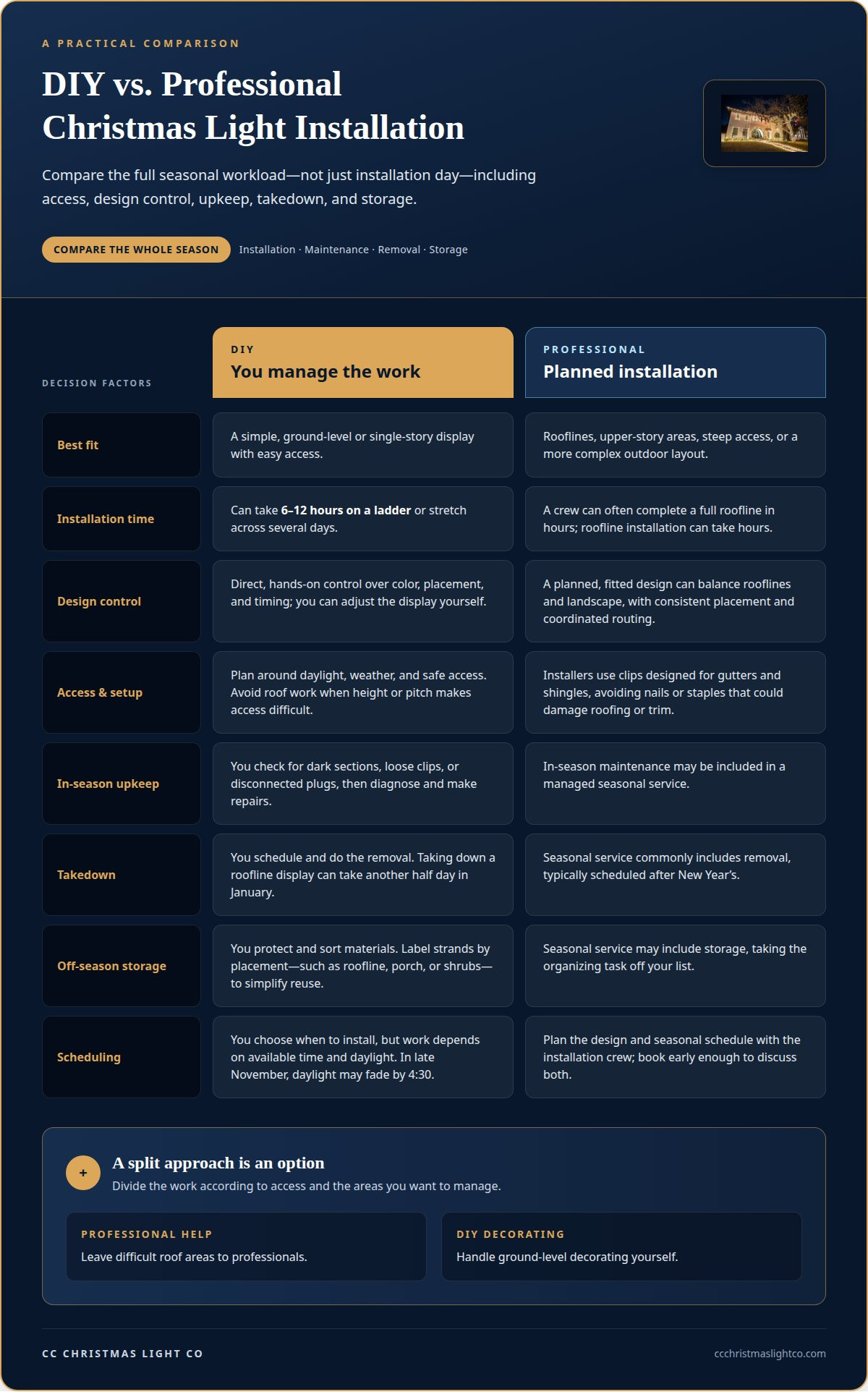
Choosing between DIY and professional services
Choose based on access, time, and the work you want to handle. A single-story home with an easy ladder setup may suit DIY. A steep roofline, upper-story section, or complex outdoor layout makes professional help more practical. You can also split the work: leave difficult roof areas to professionals and handle ground-level decorating yourself.
Safety is part of the decision. The U.S. Consumer Product Safety Commission reports thousands of holiday-decorating injuries treated in emergency rooms each season. With DIY, you manage ladders, electrical connections, and troubleshooting. Professional service can take on planning and installation, reducing the physical work you handle yourself.
In-season maintenance also affects the decision. Professional holiday-lighting services can include maintenance during the season, while DIY leaves you responsible for inspecting the display and addressing failures. If a section goes dark, first identify whether the problem affects one bulb, a strand, or a connection. Disconnect power before inspecting components, and follow the product instructions for any repair.
- DIY can fit an accessible layout when you’re comfortable installing and maintaining it.
- Professional service can fit upper rooflines, difficult access, or a display you want maintained.
- A mixed approach can fit when you want to handle ground decorations but leave ladders and roof access to a crew.
If a bulb fails, note the affected section and whether nearby strands remain lit. This can help narrow down the issue before you handle electrical connections. If the display has repeated failures or a hard-to-reach section, professional maintenance can address the problem as part of seasonal service. For a simple ground-level display, DIY repairs may be manageable when you can safely reach the components.
Decide who will manage upkeep before the lights go up. To plan a tailored outdoor Christmas light installation, consider the roofline, access, and maintenance you want handled.
CC Christmas Light Co: Residential Christmas Light Installation
CC Christmas Light Co takes your lighting concept through to a finished seasonal display. Managed service can include design, installation, in-season maintenance, removal, and storage, so you can plan for the full season, not just installation day. The online design process takes about a minute and gives you a starting point for considering how lighting could follow your home’s roofline and focal points.
Choose residential or outdoor installation when you want a tailored exterior display without managing every step yourself. CC Christmas Light Co also handles commercial and HOA Christmas light installation, creating cohesive designs for entrances, property frontages, and shared community spaces. If you’re weighing DIY against a managed approach, consider which tasks you want off your seasonal list.
Contact CC Christmas Light Co to discuss a lighting concept for your property.
Plan a Display That Fits Your Season
Choosing professional Christmas lights versus DIY also means choosing how to spend your time and attention. Before the next holiday season, decide which areas you want illuminated, which installation tasks you’re comfortable handling, and whether you want to manage upkeep yourself. A simple plan can clarify the right balance, including a hybrid approach that leaves difficult rooflines to professionals while you personalize ground-level details.
CC Christmas Light Co designs residential, outdoor, and commercial displays. Start with the features you want to highlight, such as a defined roofline, a welcoming entrance, or a coordinated commercial frontage. Then shape the lighting plan around those features. A considered display can complement your property without losing its character.
Contact CC Christmas Light Co to discuss a lighting plan for your property and take the next step toward a well-composed holiday display.
Frequently Asked Questions
How dangerous is hanging Christmas lights yourself?
Risk increases when a task puts you on a ladder near roof edges, overhead lines, or wet surfaces. If access feels unsafe, limit decorating to ground-level areas, and never climb onto a roof in poor weather. Disconnect a light strand from power before touching it. Leave difficult heights and awkward reaches to trained installers.
How does professional installation compare with DIY in overall effort?
With DIY, you’re the project manager as well as the installer. You plan the layout, gather materials, coordinate setup, troubleshoot problems, then handle removal and storage. Professional service can bring those stages together under one managed plan. Decide which tasks you want to own: choosing every detail yourself, or making design decisions while a crew handles the physical work.
What does a professional do that I can't?
You can create your own display, while professional installers bring experience coordinating separate exterior features into one composition. For example, they can align a roofline with an entrance and nearby landscaping, then plan power routing around the property. This helps when you want the display to look deliberate from the street rather than like separate decorations added at different times.
Which Factors Matter Most When Choosing an Approach?
Consider access, your comfort with ladders and electrical work, the design you want, and how much seasonal work you’re willing to take on. A small display around a reachable porch is a different project from lighting a steep roofline and several trees. For a community or business property, consider how a consistent appearance across shared frontage affects the overall presentation.
Which seasonal tasks will I handle with DIY lights?
With DIY, you’re responsible for the display from setup through storage. During the season, keep track of strands or connections that need attention. At takedown, group lights by placement, such as porch, roofline, or shrubs, and store them so each section is easy to identify next season. A simple labeled layout sketch can help you stay organized.
What can be included in professional Christmas light installation and removal?
Managed seasonal service can cover design, installation, maintenance during the display period, removal, and storage. The arrangement is tailored to the property and planned display. For example, a home’s roofline and a business entrance may call for different design choices and installation steps. Clarify which seasonal tasks the service covers so you can plan your own involvement.
