

The strongest outdoor holiday displays don’t cover every surface. They use light to define architectural lines, entry points, and landscape focal points. That’s the appeal of custom holiday lighting for curb appeal: a deliberate design feels festive while complementing your home’s proportions and landscape.
You may be drawn to roofline lights, glowing shrubs, or a striking entry, but these details work best as part of one cohesive plan. Color, placement, and scale shape how the display looks from the street and how it fits your property after dark.
Explore outdoor holiday lighting trends, ideas for shrubs and bushes, and ways to create a balanced curb appeal design. You’ll also learn what matters when hiring an installer, from consistent placement to planning around your property’s existing setup. The result is a clearer starting point for a display that feels considered, not crowded.
Key Takeaways
- Look for a coordinated plan that considers placement, installation, removal, and storage as parts of one seasonal service.
- Explore how permanent lighting can emphasize rooflines and architectural details while staying low-profile when switched off.
- Use shrub shape and scale to guide placement, so greenery adds depth without overwhelming the display.
- Assess your home from the street at dusk to identify the architectural features and entry points that deserve attention.
1. What should I consider before hiring a professional for custom holiday lighting installation?
A polished Christmas display starts with a plan for the whole season, not just installation day. Clarify whether the service covers design, installation, in-season maintenance, removal, and storage. When these steps are coordinated, the display can be planned as one composition, with organized storage after the holidays.
Ask how the design will bring together rooflines, entry points, and landscaping. Consistent spacing creates a balanced appearance, while irregular gaps can distract from clean architectural lines. The design should suit the home’s scale and emphasize selected focal points rather than treating every surface equally. For example, roofline lighting paired with a restrained entry display can feel festive without crowding the facade.
Electrical connections, weather exposure, and the property’s existing setup all affect installation planning. Ask how the installation process accounts for those conditions and how the work is protected during setup and removal. Liability insurance and a warranty on the work are also useful points to discuss. Clear answers help you understand the service’s scope and what happens if maintenance is needed.
In Corpus Christi, electrical requirements and permits depend on the work and applicable local rules. HOA requirements depend on the community’s governing documents. Review relevant requirements before installation, especially if the display affects shared spaces or must follow association design standards.
Plan ahead to settle the design and installation schedule before the holiday rush. Earlier booking gives you more flexibility, as crew capacity is finite and larger projects need more planning. Installation scope depends on the property, access, and display complexity. A roofline-only design differs from one that also includes trees, palms, and entrance details. For managed seasonal projects, scheduled removal after the holidays and organized storage are included, so the final step is clear before installation begins.
2. What are the latest trends in outdoor decorative lighting for holiday displays?
Outdoor holiday displays increasingly emphasize architectural features instead of covering every edge. Permanent systems can highlight rooflines, entryways, and exterior details after dark. Designed to remain in place, they can look low-profile when switched off. That suits homes and storefronts where daytime appearance matters. Warm white can stay quiet; selective color can define a festive focal point.
Plan outdoor electrical connections around your property’s existing setup and weather exposure. Map connection locations against the display layout before installation begins. This helps keep the composition deliberate and avoids routing the design through unsuitable areas. Consider how cords and components are positioned near doors, roof edges, and planting beds. Christmas lights should complement the exterior, not compete with it.
Commercial Holiday Lighting benefits from a clear visual hierarchy across a facade, entrance, or landscaped frontage. Set the primary line first, such as a roof edge or canopy, then add a restrained focal point near the entrance. Repeated elements can unify separate doors or building sections. Keep color and scale aligned with the building’s architecture.
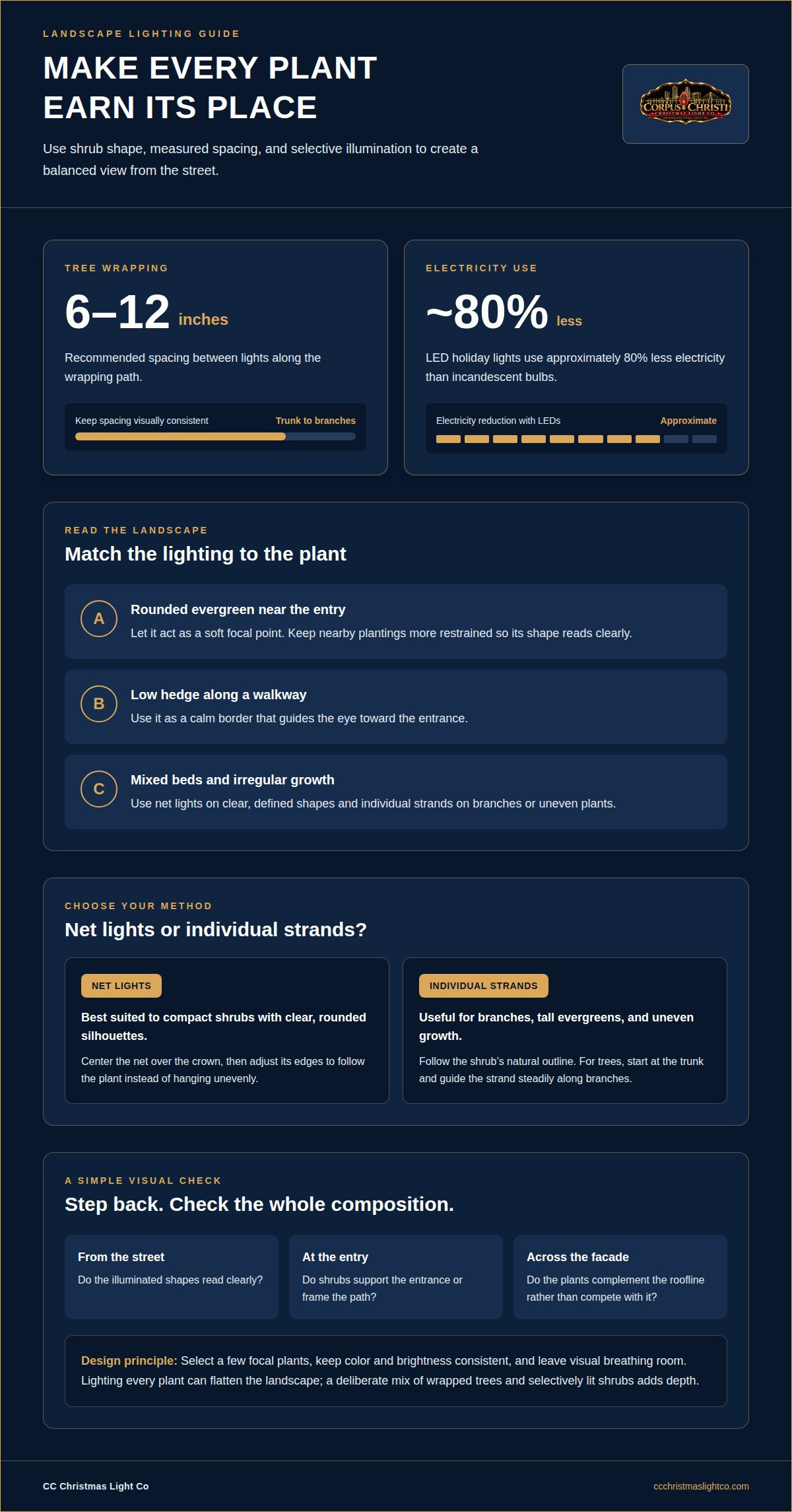
For a DIY plan, start with the display’s scale, chosen lights, and equipment already available. These factors determine the setup’s scope. LED holiday lights use approximately 80% less electricity than incandescent bulbs. To reduce electricity use, choose LEDs and focus illumination on key architectural or landscape features. Skip secondary areas that add brightness without strengthening the composition.
Permanent systems can serve holidays, celebrations, special occasions, and ordinary evenings without reinstalling the system. Before choosing one, decide which features to highlight, the look you prefer, and how the settings should change. Organized components help preserve the property’s appearance. For a tailored view, explore permanent outdoor lighting design for rooflines and entryways.
3. Decorating shrubs and bushes
Start with the landscape’s shape, not the number of lights available. A rounded evergreen near the entry can become a soft focal point, while a low hedge can form a calm border along a walkway. Choose which shrubs should draw attention, then keep nearby plantings more restrained. This gives each illuminated shape room to read clearly from the street. Consistent color and brightness help connect the greenery to the home’s overall display.
For a tree, begin at the trunk and guide the strand along the branches in a steady path. A recommended tree-wrapping pattern places lights every 6 to 12 inches along the wrapping path. Keep the spacing visually consistent as the trunk widens or branches divide. On a shrub, follow its natural outline instead of pulling strands into rigid rows. This preserves the plant’s form and prevents a tangled appearance.
Net lights can simplify coverage on compact shrubs with clear, rounded silhouettes. Center the net over the crown, then adjust the edges so the pattern follows the plant instead of hanging unevenly. A broad, flat shrub may suit a net more naturally than a tall, irregular evergreen. In mixed beds, use net lights on defined shapes and individual strands for branches or uneven growth.
Step back to the street after placing each group of lights. Check whether an illuminated shrub supports the entry, frames a path, or competes with the roofline. Matching shrubs beside a front walk, for example, can create a balanced approach, while lighting every plant may flatten the landscape. Consider sightlines from the driveway and street, too. A deliberate mix of wrapped trees and selectively lit bushes adds depth without turning the yard into an uninterrupted field of light.
4. Custom lighting design for curb appeal
Begin with the view that matters most: your home’s approach from the street. Photograph the facade at dusk, when exterior details and existing landscape lighting become visible together. Look for a strong focal point, such as the front entry, a distinctive roofline, or a mature tree. Custom holiday lighting for curb appeal works best when each illuminated feature supports that focal point instead of competing for attention.
Next, establish visual hierarchy. Use the roofline to define the home’s outline, then let the entrance create a welcoming destination after sunset. A wreath or garland can reinforce the doorway, while restrained shrub lighting can guide the eye toward it. If your home has a prominent gable, emphasize that architectural peak rather than outlining every edge. The result feels composed, not crowded.
Choose a unified palette before deciding where each light goes. Warm white can create a quiet, architectural effect, while selective color can add a festive accent around an entry or landscape feature. Repeating one palette across the roofline, doorway, and nearby plantings makes the design feel intentional rather than like a collection of unrelated decorations. Keep brightness and scale in proportion to the home’s facade.
Consider how the display should work beyond the holiday season. Permanent Holiday Lighting uses concealed custom-track systems with programmable scenes to highlight rooflines, entryways, and architectural details throughout the year. Plan which areas deserve attention, your preferred style, and how you’ll use the system. Controls and future maintenance belong in the design conversation alongside the visual plan.
For a cohesive result, judge the design from the street at dusk, then refine placement, palette, and focal points together. That simple perspective helps reveal whether the entrance feels inviting and the architecture remains legible. Explore a custom lighting design that fits your home’s lines and landscape.
CC Christmas Light: Permanent Holiday Lighting
CC Christmas Light Co provides Permanent Holiday Lighting for properties where architectural details should remain defined beyond the holiday season. Concealed custom-track systems offer programmable scenes for holiday and everyday use, with a low-profile appearance when switched off. It’s a practical fit if you want year-round lighting without reinstalling seasonal strands.
For a seasonal display, CC Christmas Light Co provides Residential Christmas Light Installation, Commercial Holiday Lighting, and HOA & Community Lighting. The managed seasonal program includes design, professional-grade lighting materials, installation, in-season maintenance, scheduled removal after the holidays, and organized storage. Your property’s architecture, landscape, and preferred focal points guide the design.
If you’re considering a permanent system or a seasonal display, contact CC Christmas Light Co to discuss your property and lighting goals.
Set the direction for your display
Before planning the next season, choose the impression you want your property to make. A welcoming entrance, a defined roofline, or a composed landscape can each guide the design. That priority gives custom holiday lighting for curb appeal a clear starting point, whether the property is a home, business, or shared community space.
CC Christmas Light Co designs and installs holiday lighting around your property, providing Residential Christmas Light Installation, Commercial Holiday Lighting, and HOA & Community Lighting. The right approach depends on the architecture, the view from the street, and the features you want to emphasize. Begin with one focal point, then let the rest of the display support it.
Contact CC Christmas Light Co today to discuss a lighting plan for your property. A considered design can make the season feel polished from the first view.
Frequently Asked Questions
What are the latest trends in outdoor decorative lighting for holiday displays?
Permanent Holiday Lighting can shift between festive scenes and subtle everyday settings. It lets a property move from a holiday look to an understated architectural effect without seasonal reinstallation. For example, a home might use a distinct holiday color scheme, then choose a neutral scene for ordinary evenings. The best setup suits the building and how you plan to use it.
What should I consider before hiring a professional for custom holiday lighting installation?
Look for a clearly defined project scope that identifies which areas will be lit and how the finished design will look. Ask how in-season maintenance is handled if a section needs attention, and how scheduled removal after the holidays and organized storage are included in the managed seasonal program. For properties in Corpus Christi, Portland, and North Padre Island, a clear plan helps align the design with the property’s layout and access.
How do I achieve a professional look with custom holiday lighting on my home?
To create custom holiday lighting for curb appeal, use a dominant architectural line and a smaller supporting accent. Keep the visual rhythm consistent along roof edges or entry details, and finish strands neatly at natural breaks rather than leaving loose ends. For example, a defined roofline paired with a restrained doorway accent can make the facade feel intentional. Choose a palette before adding secondary features.
What Design Options Are Available?
Design options can include rooflines, ridgelines, peaks, windows, trees, palms, landscape areas, wreaths, and garland. The right mix depends on your property’s architecture and the features you want to emphasize. A home with a prominent entry may suit doorway décor and a clear roofline, while a property with mature palms may place more emphasis on its landscape. Each element can contribute to one coordinated exterior design.
What holiday lighting designs improve curb appeal?
A display that is easy to read from the street can strengthen your property’s presentation. Consider defining the entrance, drawing attention to a distinctive architectural feature, or giving a landscape element a supporting role. For a corner property, consistent treatment across visible sides can make the display feel cohesive from different approaches. Keep the main visual emphasis clear rather than giving every feature equal weight.
What lighting colors and styles work best for different home exteriors?
Choose colors and styles that complement your exterior materials and architectural character. Warm white can suit traditional brick or stone, while a restrained palette can complement contemporary lines. For a more playful holiday effect, use color as a focused accent instead of mixing unrelated tones across the facade. Match the style of the lights across the roofline, entry, and landscape for a unified appearance.


